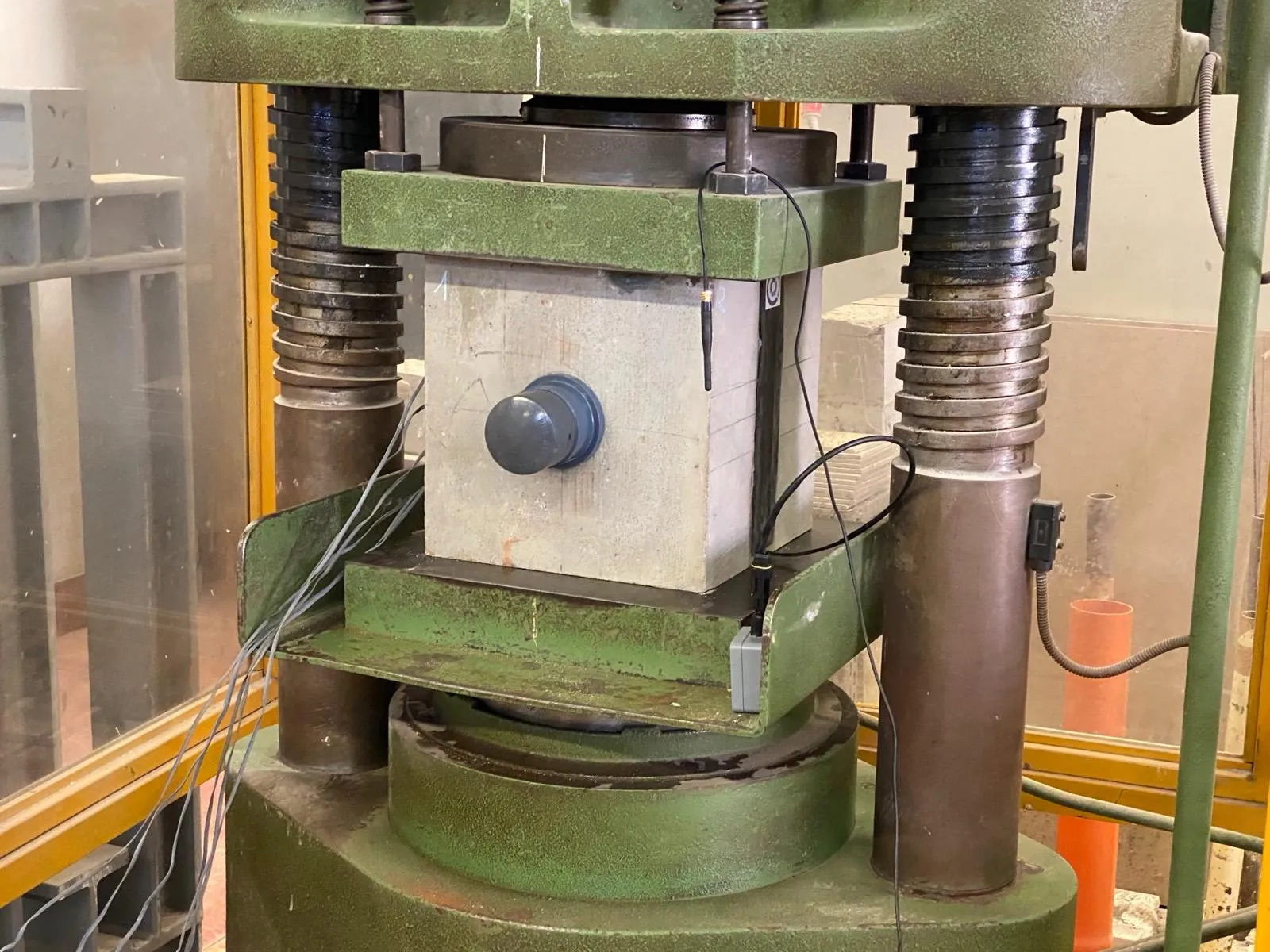
How the stress-release test works
The measurement uses the strain-gauge rosette method set out in standard UNI 10478-3:1998. The single-use sensor, with its triaxial rosette gridded at 45°, is bonded to the concrete surface with the ECB 4/25 structural adhesive in under 10 minutes, with no primer, controlled roughening, or chemical treatment of the substrate. A localised hole, drilled with a core bit, releases the stresses present in the material, and from the strain the gauge records during that release the pre-existing stress state at the point can be reconstructed, that is, the prestress actually present. Reading is wireless and in real time on a PC: the 868 MHz acquisition unit communicates with a USB dongle and the RF Monitor software, which logs the data in the 16 Mbit internal memory and exports it as CSV or PDF.
A drop in cable tension over time, caused by phenomena such as steel relaxation, anchorage losses, or corrosion, can affect structures such as beams, slabs, bridges, and tanks in pre/post-tensioned concrete.
The sensor is single-use and serves a single measurement: Easy Concrete Strength is therefore a spot, diagnostic test of the stress state of a concrete element, not a permanent continuous monitoring system like the other InSensus products.